Grain Knowledge
How variety, process and cooking behaviour shape the rice that arrives.
These pieces start with the grain itself. They compare 1121, 1718, 1509, 1401 and 1847 as separate briefs, explain what grain length tells a buyer and what it leaves out, and set steam, creamy sella and golden sella side by side as processing expressions of one variety.
Two more cover how ageing changes the way basmati cooks, and how to read a specification line by line: what each figure measures, in what unit and on what basis. Read in any order, they give an importer the vocabulary to compare offers properly.
Browse the Journal
Length is only the Beginning
What makes a basmati grain exceptional after length has been measured.
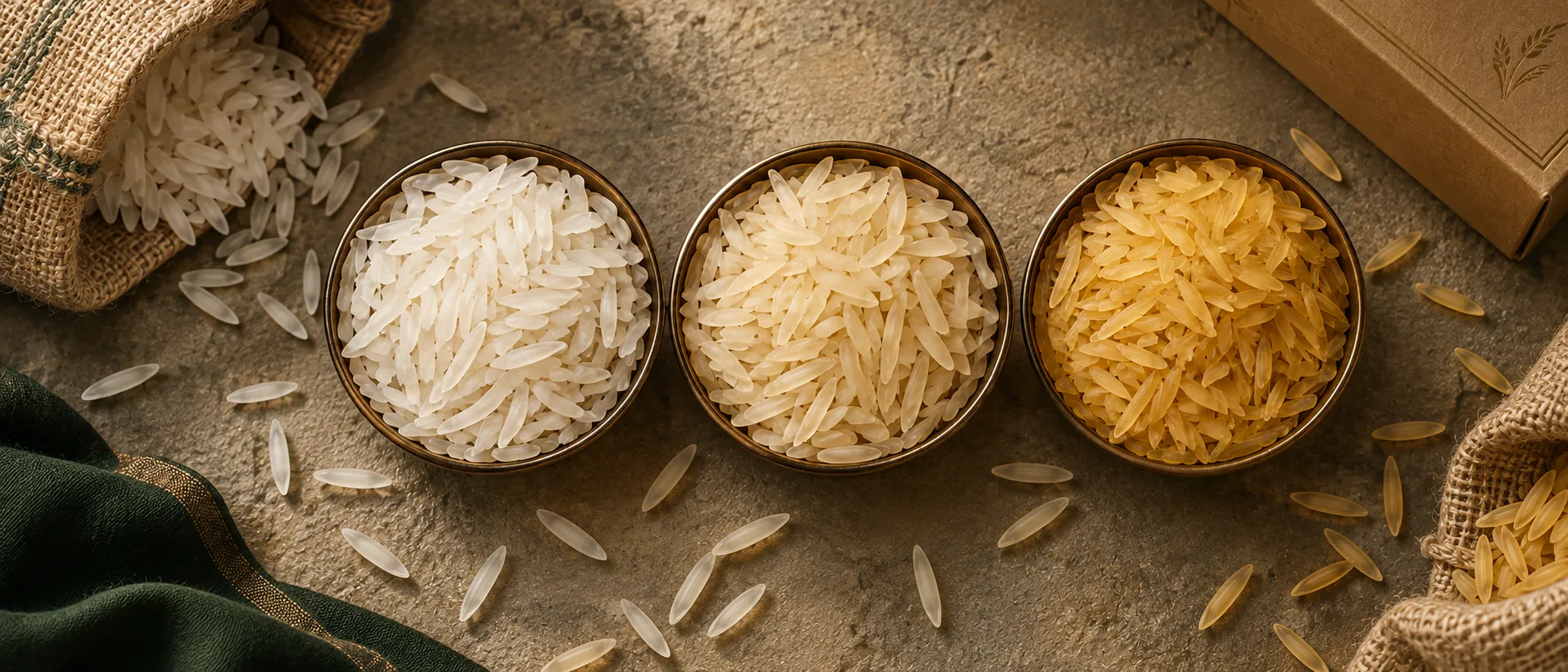
Steam, Creamy Sella or Golden Sella?
Three expressions can begin with the same variety and cook very differently.
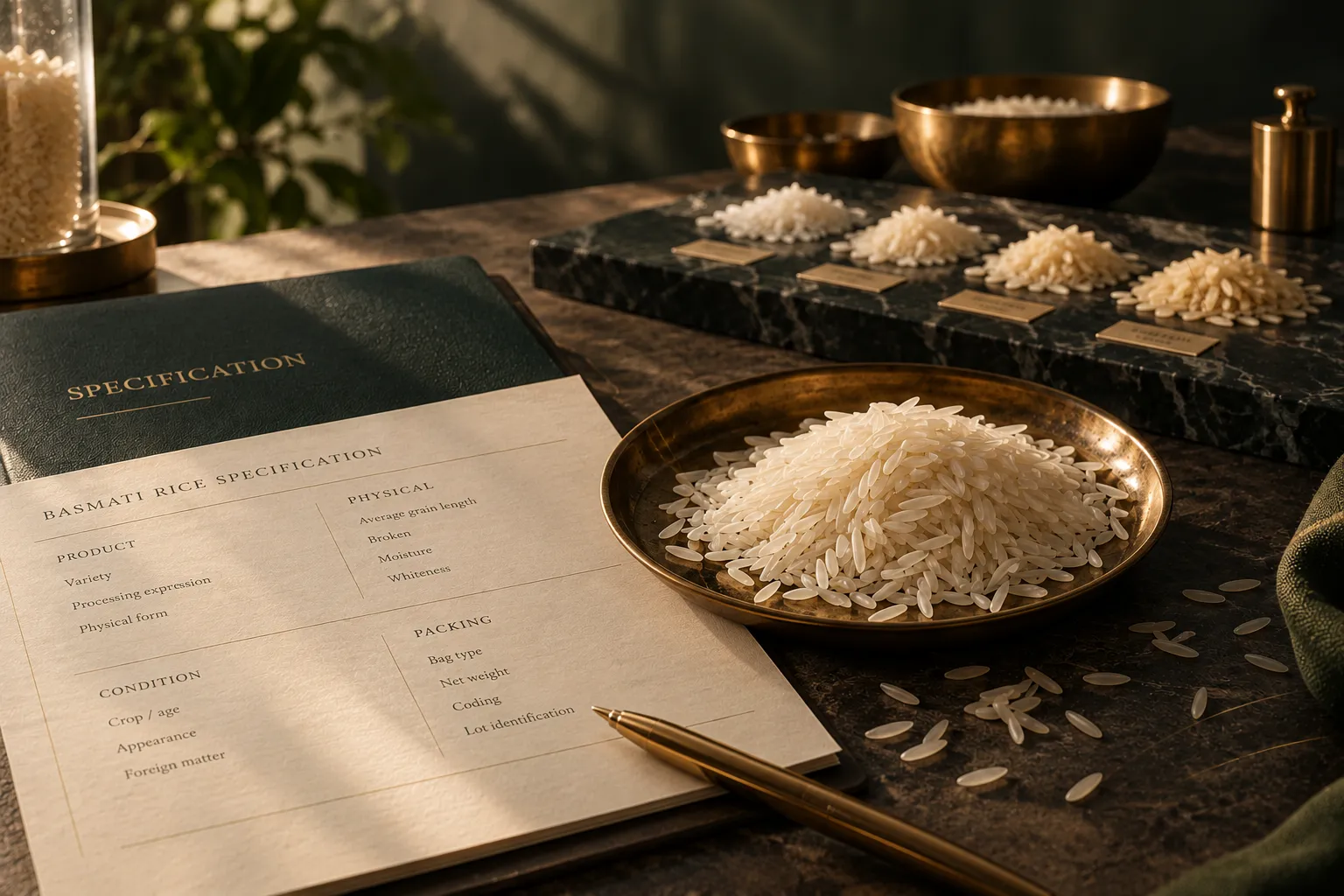
Reading a Basmati Specification
How to read length, broken, moisture and whiteness as a system, not four isolated numbers.
Why Basmati is Aged — and What Changes in the Pot
Ageing can change how basmati absorbs water, elongates and develops its cooked texture. But time alone does not tell a buyer what the grain will do.
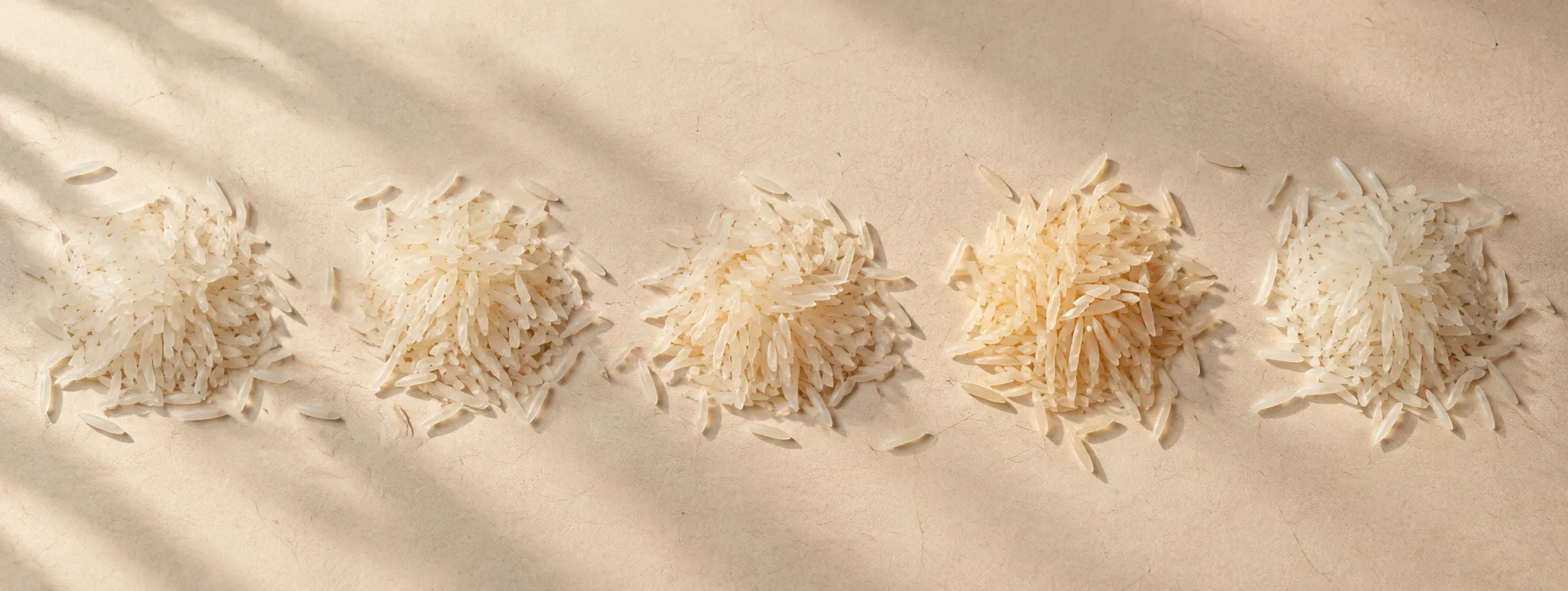
Five Basmati Varieties. Five Different Briefs.
Where five modern Basmati varieties came from, what they were bred to do, and what the differences mean in a specification.