Why Basmati is Aged — and What Changes in the Pot
Ageing can change how basmati absorbs water, elongates and develops its cooked texture. But time alone does not tell a buyer what the grain will do.

Age is often treated as a shorthand for quality in Basmati. More precisely, it is a history: time spent under particular storage conditions, changing how the grain responds to water and heat.
That history can matter to the cooking result. But age alone cannot tell a buyer whether a lot will deliver the result a programme needs.
01 — Time leaves a trace
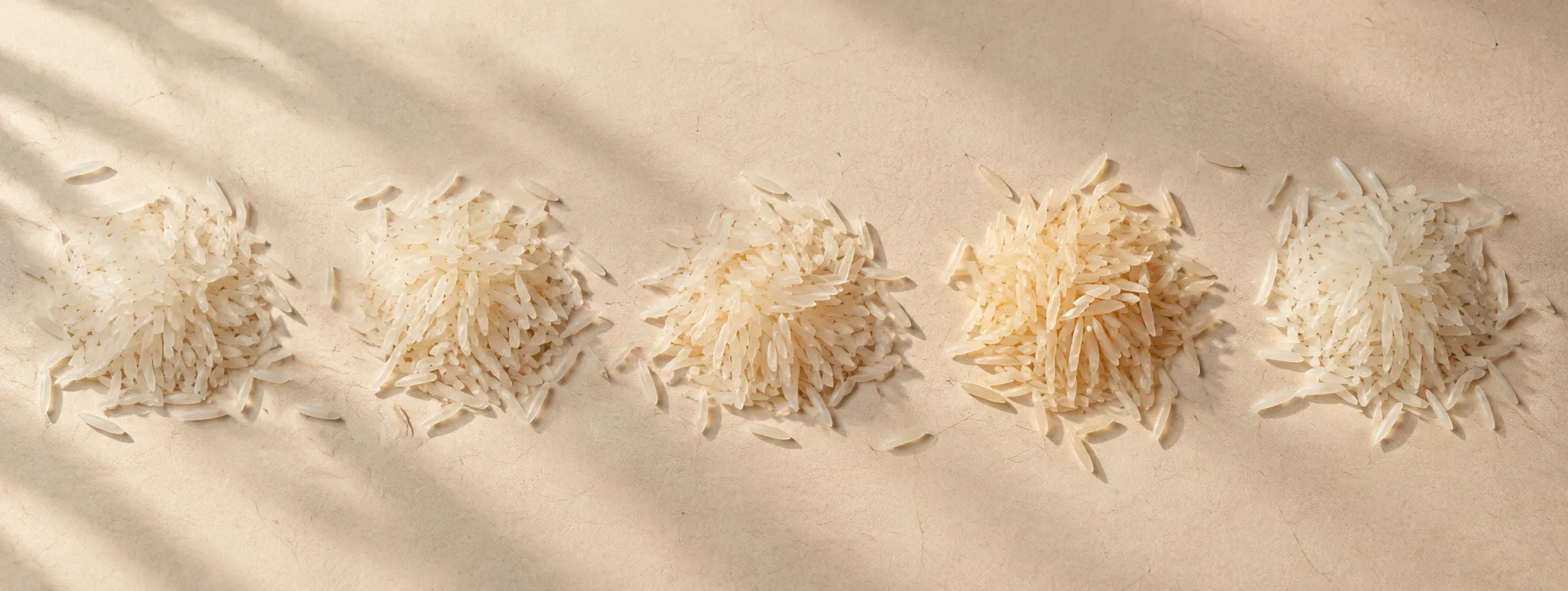
During storage, rice undergoes physical and biochemical changes. Research on Basmati has recorded changes in water absorption, cooked-grain elongation, texture, aroma and the solids released during cooking. Together, these can influence how the grain expands, feels and performs in the pot.
In one study, Basmati-386 aged as paddy for five months showed increased water absorption and elongation, while cooking time and solids lost into the cooking water decreased. Texture changed as well. The result demonstrates how storage can alter cooking behaviour; it does not establish a universal ageing schedule for every Basmati variety or commercial lot. The important detail is that these changes do not follow one universal pattern.
What storage can change

Water absorption
How the grain takes up water during cooking.
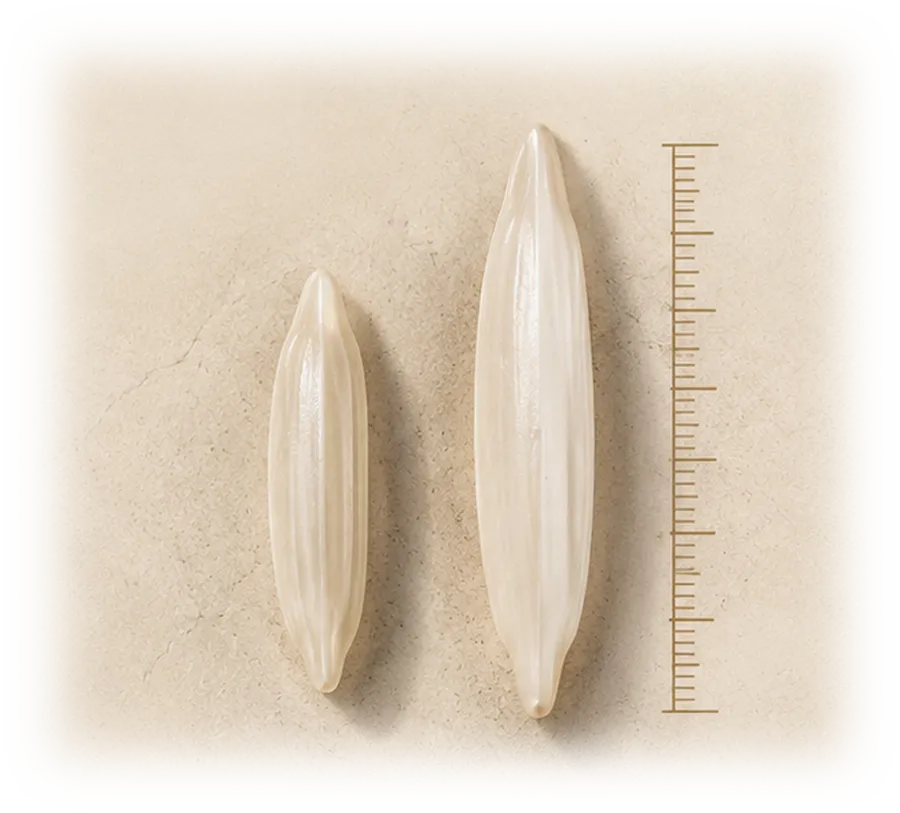
Cooked elongation
How its length changes as it cooks.

Texture
How the cooked grain feels and holds together.

Cooking behaviour
Time, expansion and the solids released into the cooking water.
Not every lot changes identically, and no single measure tells the whole story.
02 — Age is not the whole history
When a lot is described as aged, an important question follows: aged from when, and under what conditions?
Paddy before milling
Paddy stored before milling and rice stored after milling represent different starting points in the grain’s storage history.
Rice after milling
Storage duration, temperature, moisture conditions and packaging influence how that history develops.
A stated age is most useful when its basis is clear and the lot’s identity is traceable. Two lots described as aged may not share the same storage history—or the same cooking behaviour.
03 — Judge the result, not the claim
For a buyer, the question is not simply how many months the rice has been stored. It is whether the resulting grain suits the intended programme.
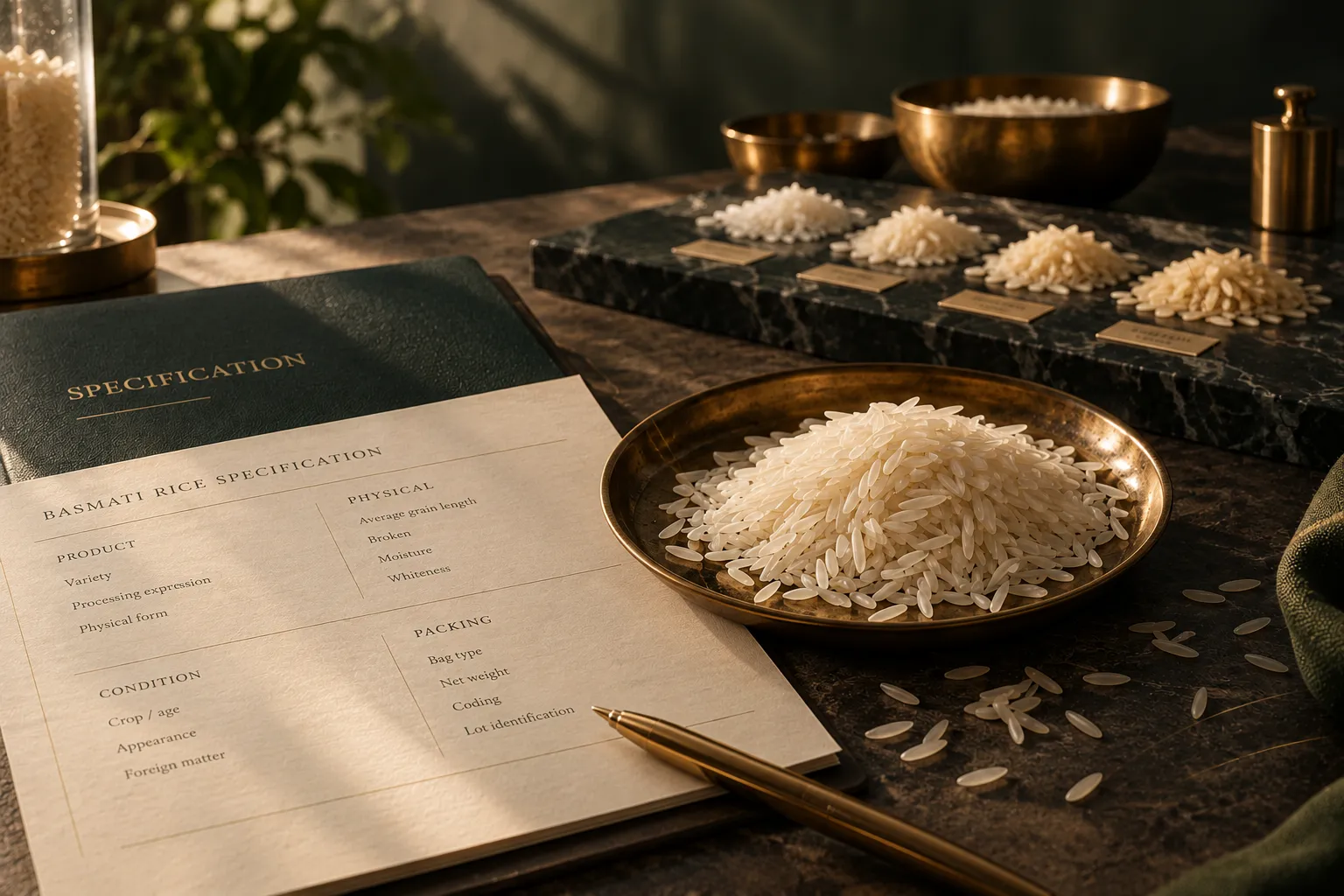
Confirm the stated crop or age basis and the identity of the lot.
Consider its physical condition, moisture and other agreed specification parameters.
Use a representative sample under the intended soaking, water ratio, cooking and holding conditions. Observe elongation, separation, texture and performance after holding.
An age claim can inform the decision. The grain’s demonstrated behaviour should determine it.
Age is a history. Performance is the evidence.
Time may change the grain, but the right age is not a number that works for every variety, kitchen or market. It is one consideration within a specification built around the result the programme requires.