Choosing Basmati for Biryani at Scale
At scale, the right rice is not simply the longest grain. It is the grain that survives the cooking method, holding window, service cycle and economics of the programme.
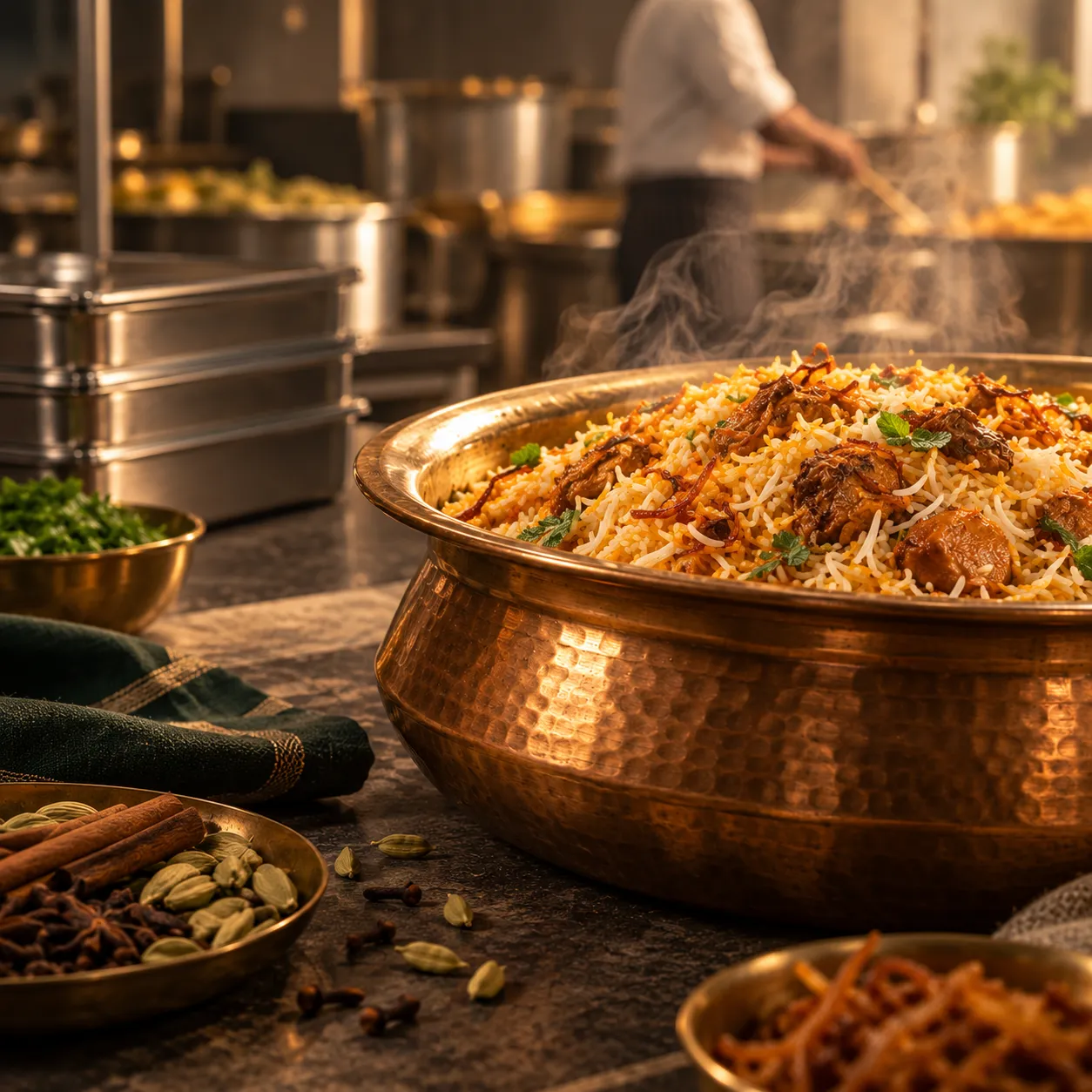
The service model comes first
A restaurant finishing biryani to order, a caterer holding hundreds of portions and a central kitchen writing one process for thousands of meals ask different things of the rice. The variety is only part of the answer. What decides the result is the service model around it: how deep the bed is, how much water and which vessel, how long the rice waits, and whether it is reheated before it reaches the table.
A grain that is excellent cooked to order can disappoint after an hour in the holding cabinet. Choosing for scale means choosing for the deepest, slowest, longest-held version of the dish, not for the best single plate.
1121, where length leads the brief
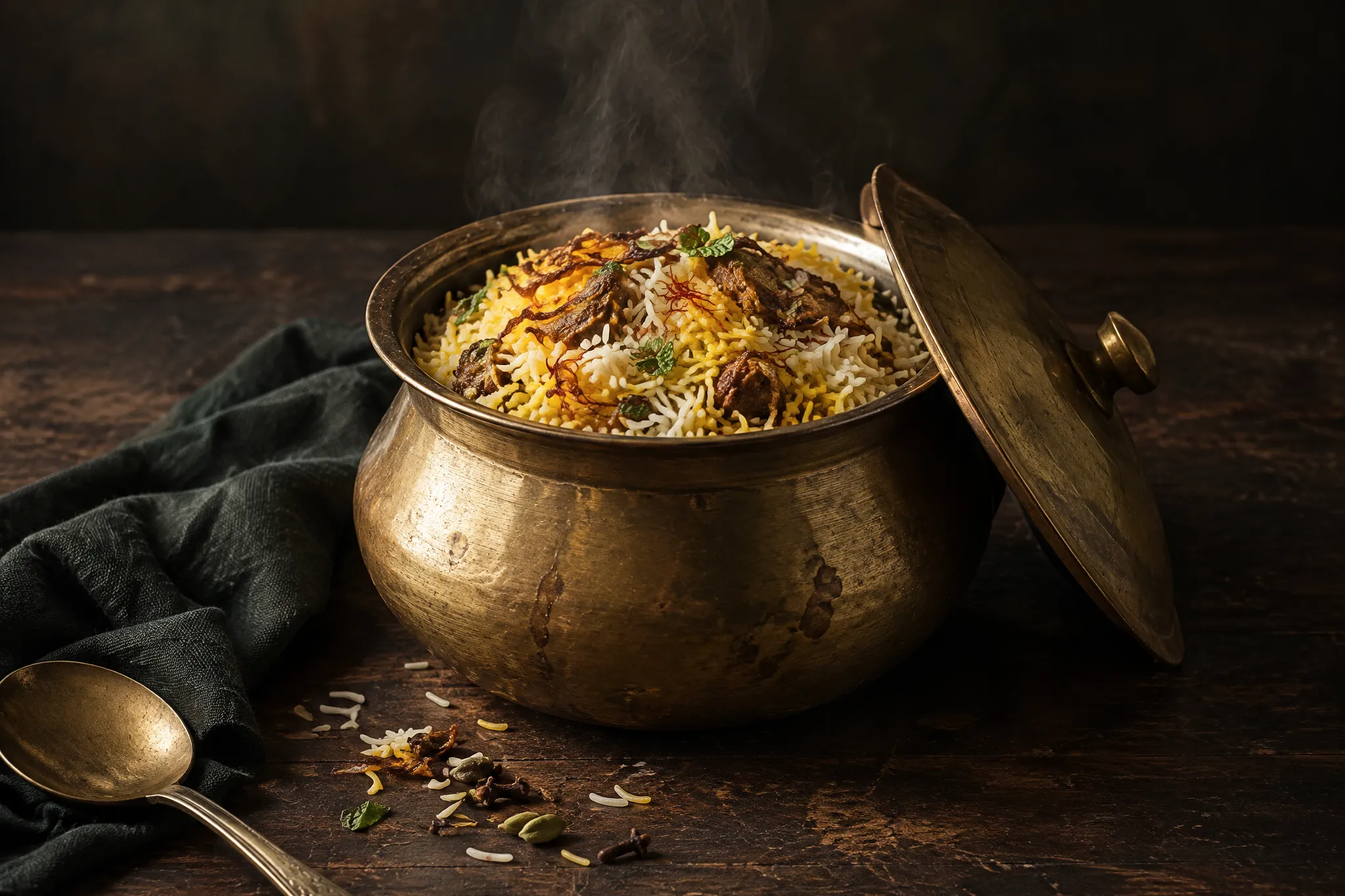
For programmes where pronounced cooked length and visual presence are central to the brief, 1121 answers it directly: the opened pot shows long, well-separated grains, and the name is recognised by buyers and diners alike.
Length only pays if the kitchen can reproduce it. In a deeper bed, with different drainage or a longer hold, the same grain can finish differently from the small trial that chose it.
1718 and 1509, where programme fit leads
For programmes where balance, repeatability and overall programme fit carry equal weight, 1718 and 1509 each make their own case. 1718 offers strong Basmati character and length without defaulting to 1121; 1509 is often weighed where volume, repeatability and programme economics sit alongside presentation.
Neither stands above the others in the abstract. The question is whether the grain fits the menu, the cooking system and the commercial structure around it.
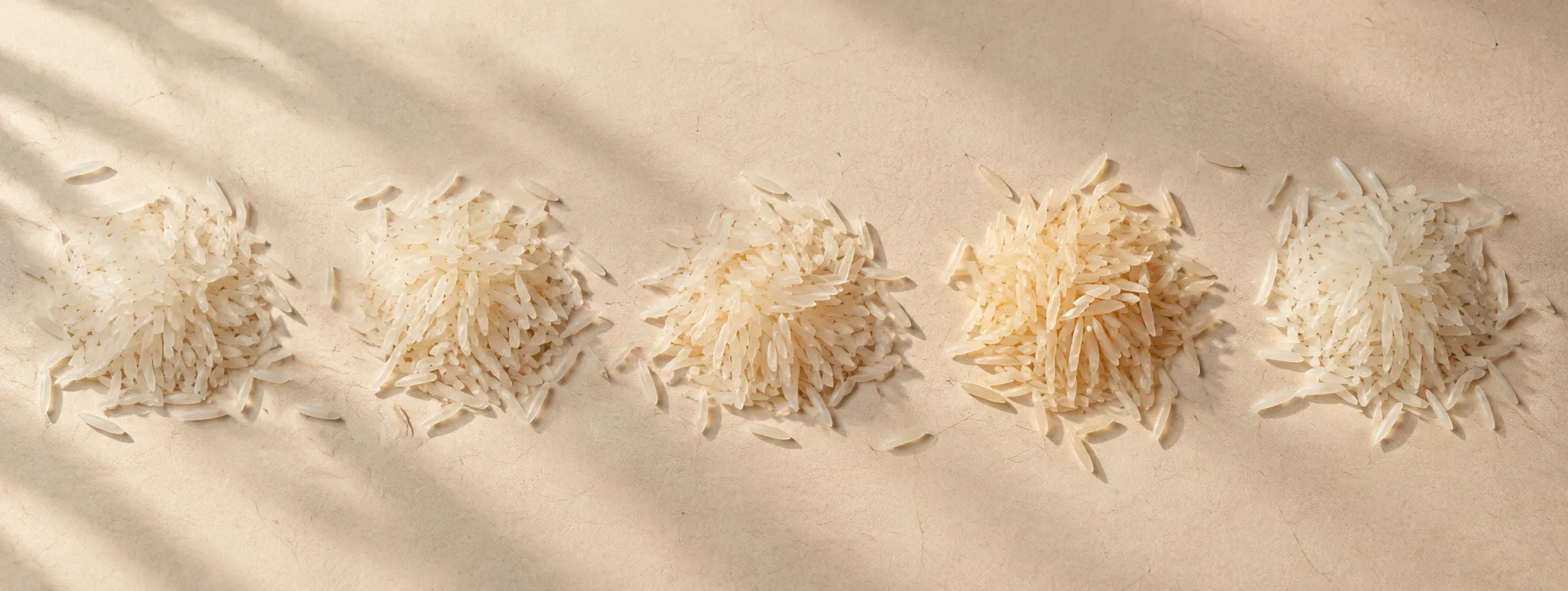
Positions in the range
The process matters as much as the variety
Raw, steam and sella expressions make different demands on the same method. The soak, the par-cook, the water ratio, the vessel, the depth of the batch and the holding window all interact with the expression, so no single method suits every grain.
Trial a grain in the system it will actually be used in. A boil-and-drain method, a sealed dum and a combi-oven place very different demands on the same rice.

Test the grain at service scale
- Use the intended vessel, water and batch size.
- Reproduce the intended soaking and par-cooking method.
- Evaluate the immediate cooked result.
- Evaluate the real holding and service cycle.
- Repeat with the same lot.

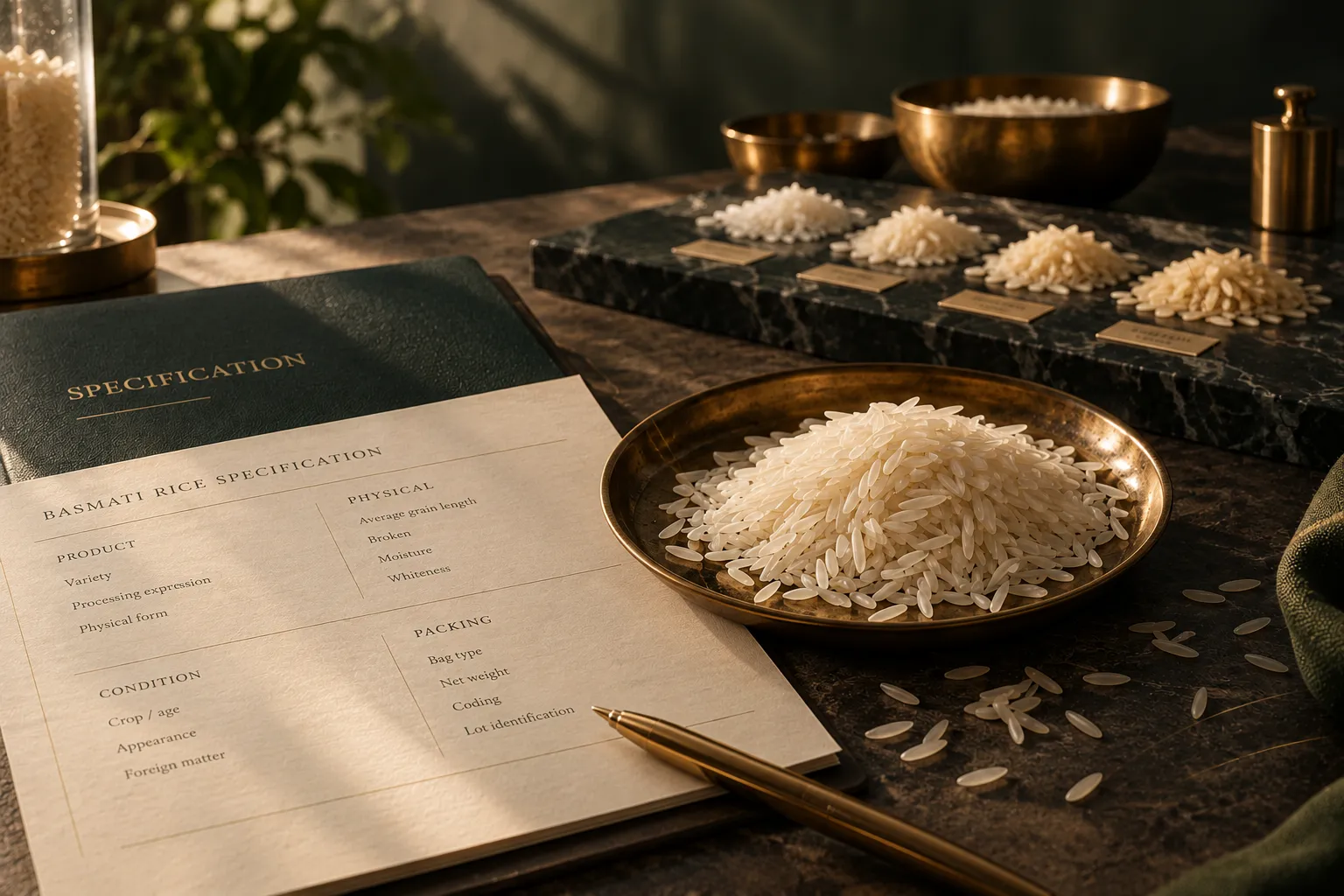
Lock the specification, not just the variety
Once the cooking result is right, lock the full requirement:
variety, processing expression, grain length, broken tolerance, moisture, whiteness or appearance, age or crop where relevant, packing and the other agreed parameters.