Indian Basmati Rice for Europe: A Practical Guide for Importers
The value of a basmati offer lies in what arrives: the grain you specified, the evidence behind it and the terms agreed for delivery.
Two quotations can appear comparable while describing different products. Processing, ageing, broken percentage, packaging, acceptance limits and delivery terms all shape what arrives. Define the brief first; compare prices second.
01 — Define the grain by its use
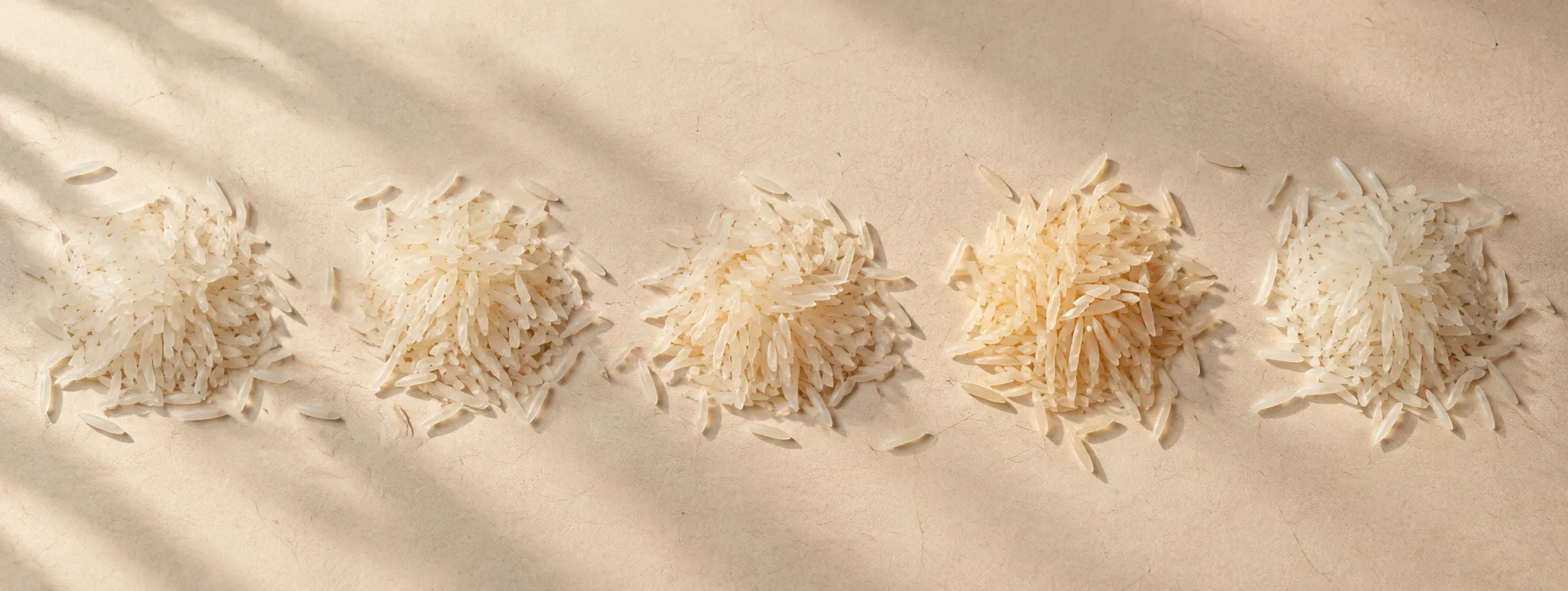
Start with the end use and the finished product. Agree the variety, processing style, required grain and broken characteristics, moisture and ageing expectations, cooking behaviour, pack format and acceptable tolerances.
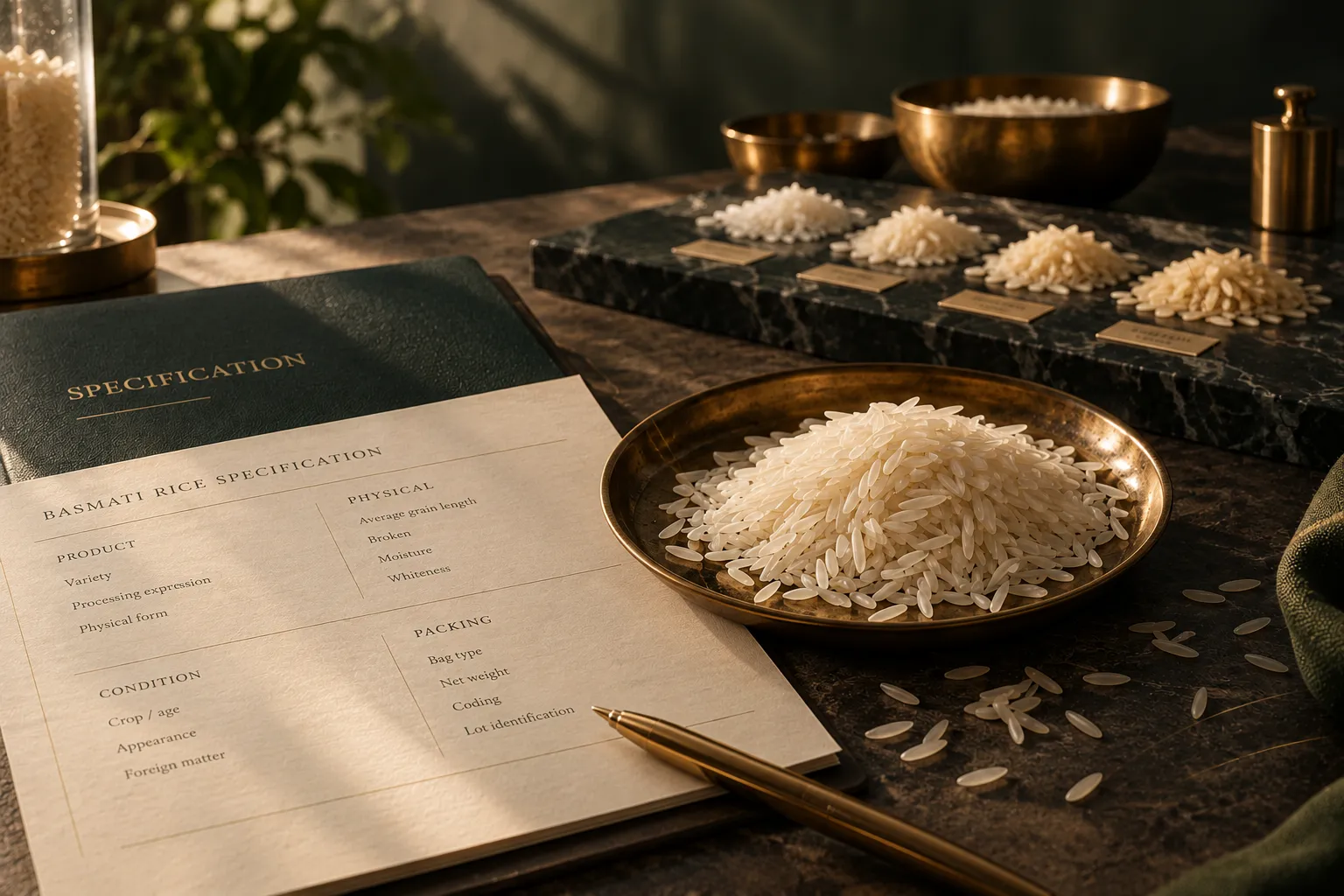
A sample establishes the intended character. A written specification makes that expectation assessable in the delivered lot. Agree both before comparing quotations.
A buying brief should settle four things.
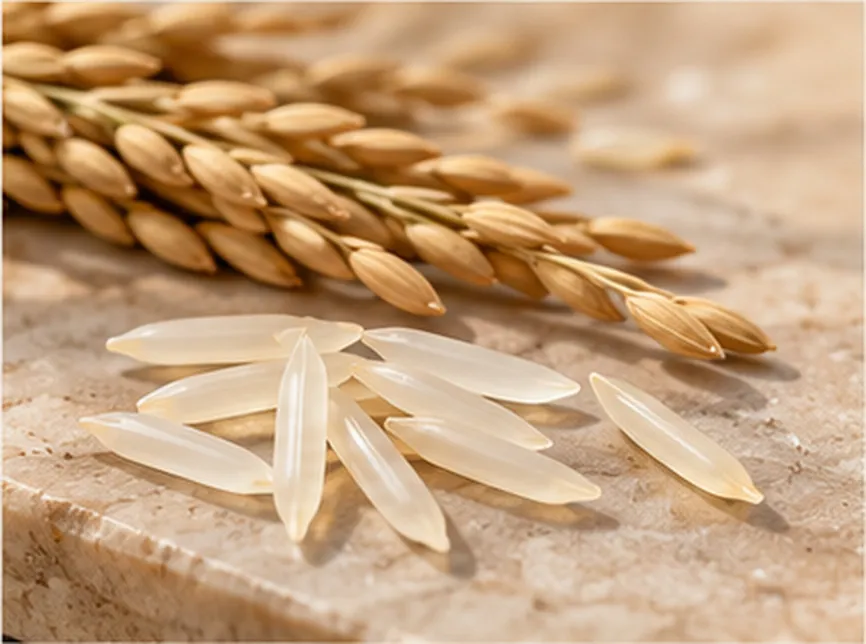 VarietyThe specific variety being offered.
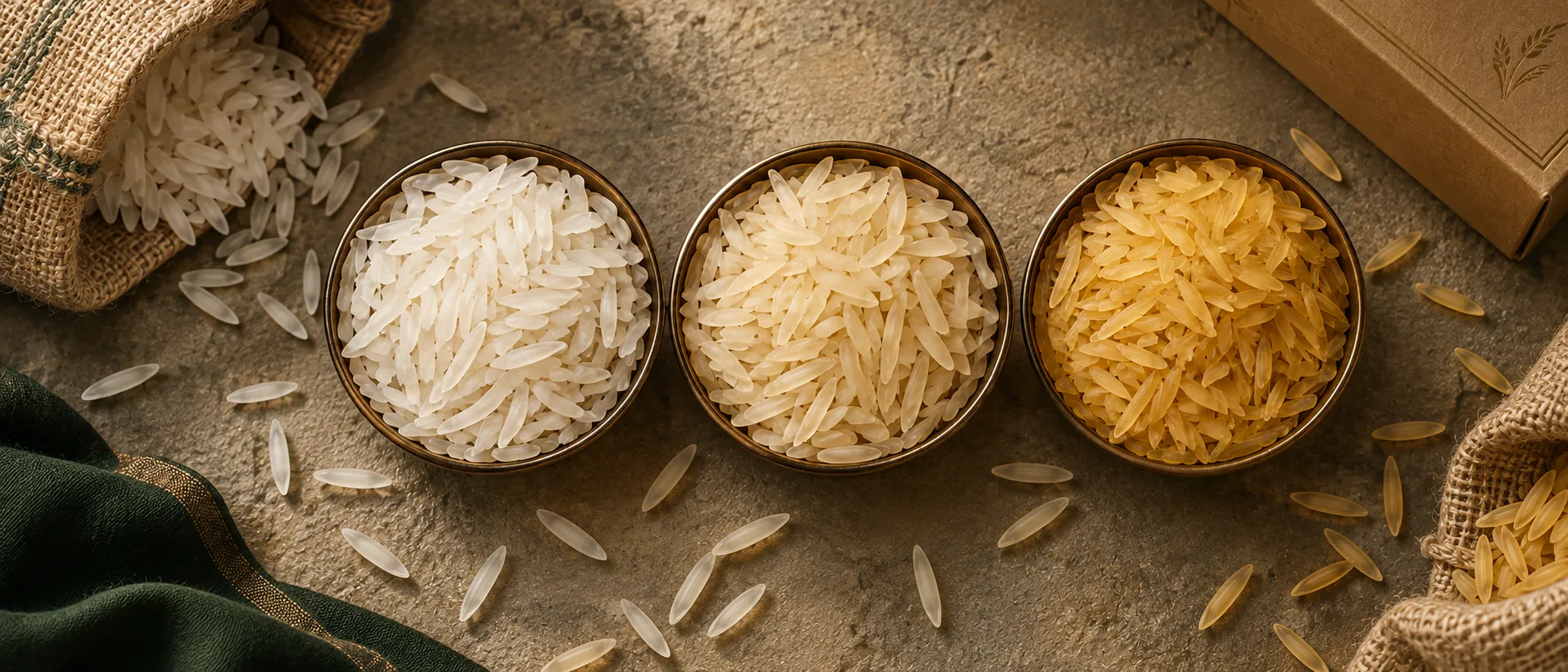
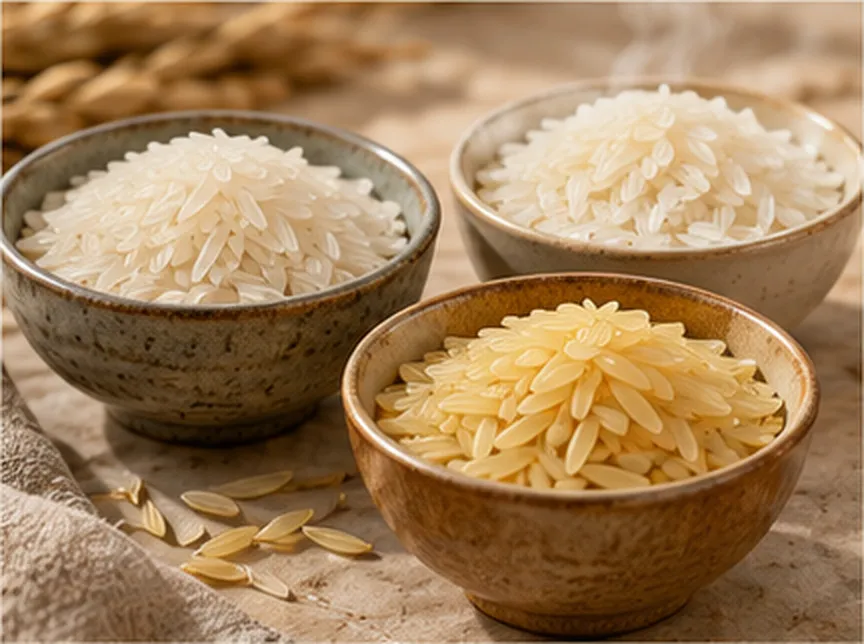 ProcessingRaw, steam or sella.
 Grain characterLength, broken percentage, moisture and ageing expectations.
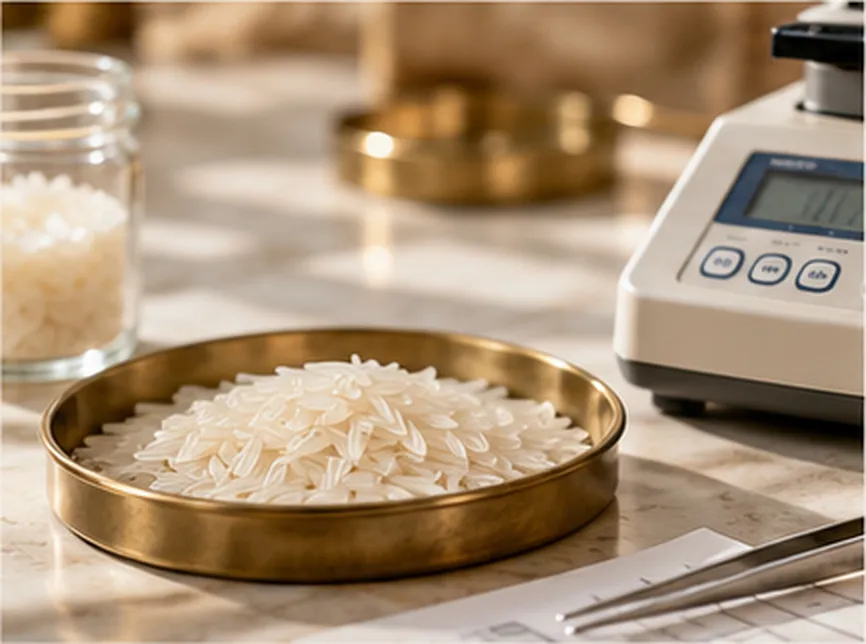 Acceptance criteriaThe agreed tolerances and sample against which the delivery will be assessed.
02 — Ask what the evidence actually covers
Ask for the product specification, relevant laboratory reports, lot identification and traceability information, and any certification required by the buyer. Check what each document covers, its date, the sample or lot it refers to and who issued it. For certification, verify the site, scope and validity.
A sample, a laboratory report and a certification are not interchangeable. Each answers a different question; none alone guarantees that every part of a shipment meets every buyer requirement.
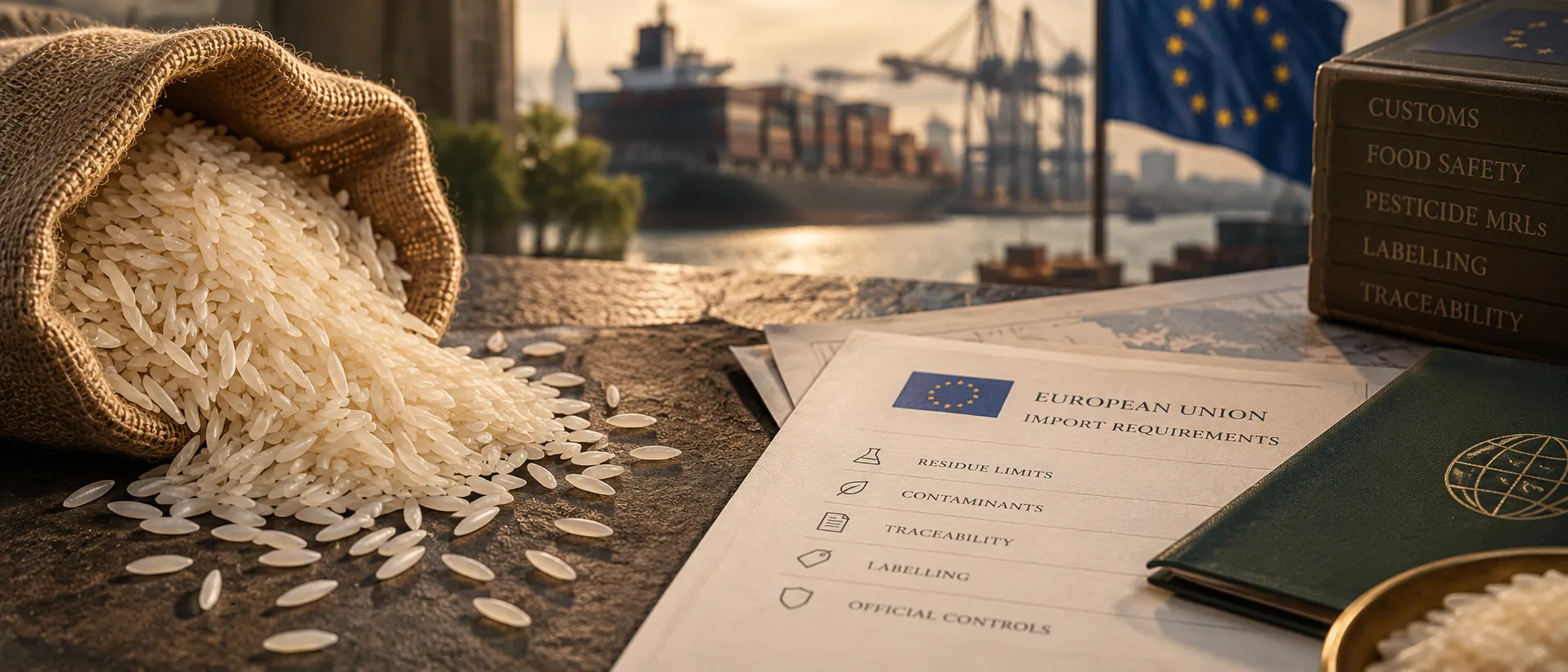
Working on an EU-bound programme? Read Bringing Basmati into Europe for the relevant import framework and regulatory considerations.
03 — Compare the complete offer
Compare prices once the specification is aligned. Offers may differ in grain, packing, services or delivery terms. Confirm what is included—and who is responsible for each requirement.
| Compare | What to align |
|---|---|
| Product | Variety, processing, grain length, broken limits and agreed sample |
| Evidence | Lot-specific reports, traceability and required certification |
| Packing | Bag material and weight, artwork, language and product coding |
| Shipment & terms | Incoterm, destination, timing, payment, included costs and documentation |
04 — Why direct mill supply makes commercial sense
Basmati does not always travel from mill to importer through a single commercial relationship. Depending on the route, procurement, aggregation, milling and export sales may involve several parties. Each trading layer can introduce another margin—and another hand-off at which pricing, specifications and responsibilities must be coordinated.
A more direct mill-supply route can reduce the number of trading layers between the mill and the buyer. The benefit is not that milling, packing, testing or freight becomes cost-free; it is that the commercial route can be shorter, clearer and more efficient.
With Oariza buying paddy directly, the supply route avoids a separate broker, aggregator or export agent adding another trading margin. Depending on the variety, our calculated difference between mill-direct and broker-intermediated supply is USD 40–60 per metric tonne—equivalent to USD 1,000–1,500 across a 25 MT container.
For Oariza, the aim is to bring the buyer’s specification and the source of supply into closer alignment, coordinating the relevant processing, packing and export requirements before shipment. The product, the responsibilities and the price should describe the same programme.